Tuesday, 01 December 2020
East Kalimantan's Economic Transformation
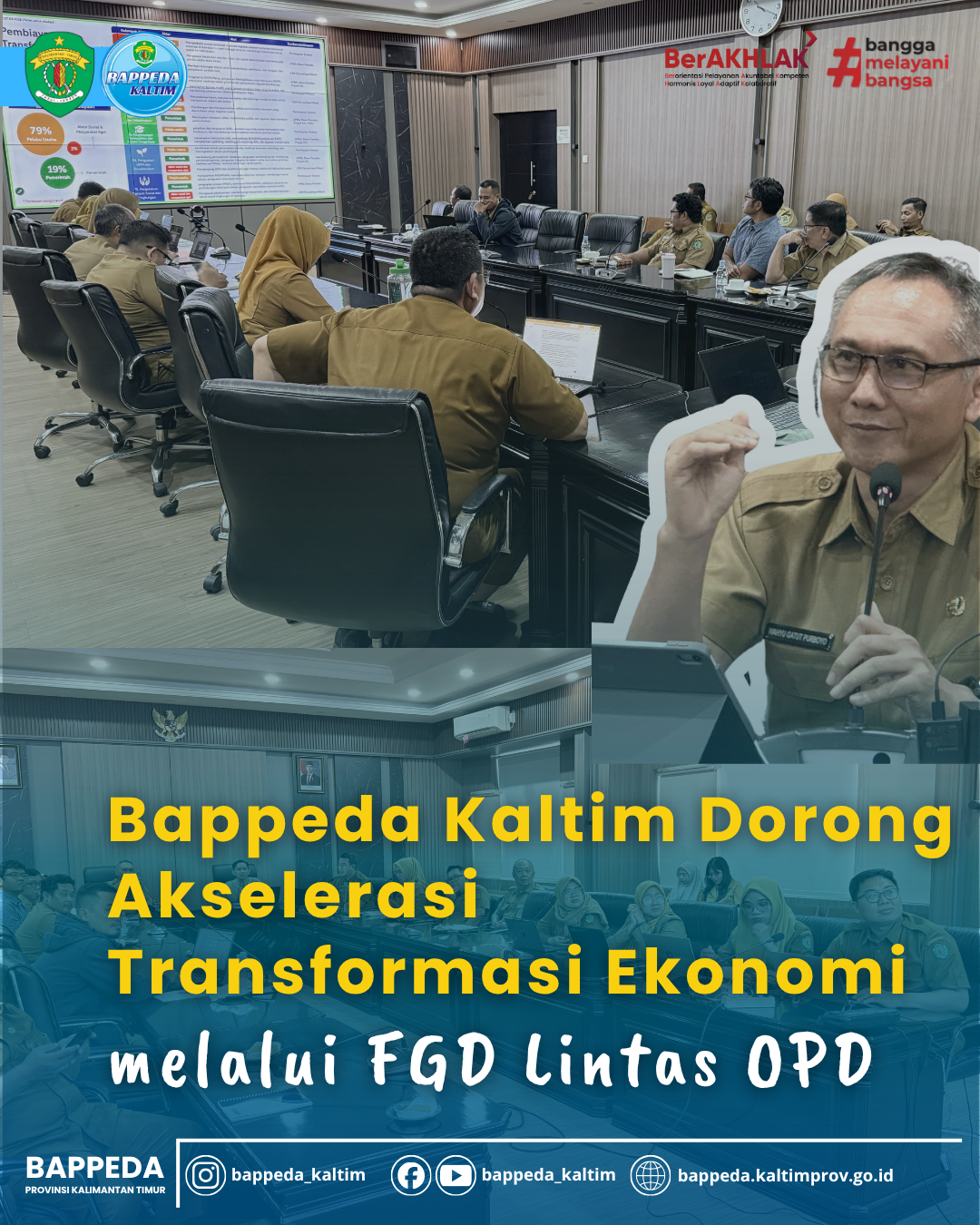
Samarinda, 1/7/13. The economic growth of East Kalimantan Province to date is still largely dependent on natural resources which  cannot be updated, especially in the coal export sector, up to 80% so it is necessary to planning that supports the interests of the community and is environmentally conscious or natural resources that do not damage the environment, so that strategic steps are needed, namely "economic transformation from non-renewable natural resources to management of renewable resources".
This was stated by Plt. Regional Secretary of East Kalimantan Province and Head of the East Kalimantan Bappeda when giving a speech and presentation at the 2014-2018 East Kalimantan Province RPJMD Preliminary Draft Workshop within the framework of the 2030 East Kalimantan vision in the East Kalimantan Bappeda Strategic Plan meeting room, Jl. Kusuma Bangsa No. 2 Samarinda, attended by approximately 150 participants from all SKPD within the East Kalimantan Provincial Government and from the Samarinda Academic / Unmul.
In his presentation, H. Rusmadi said the objectives of the 2014-2018 East Kalimantan RPJMD Preliminary Draft Workshop within the framework of the 2030 East Kalimantan vision were: 1. Understanding the problems and strategic issues for the development of East Kalimantan; 2. Sharpening the formulation of vision, mission, goals and development targets for 2014-2018; 3. Seeing the consistency between the vision, mission, goals and targets with the formulation of development problems and strategic issues for East Kalimantan Province; 4. Testing the alignment of vision and mission; 5. Testing the alignment of development goals and targets; 6. Ensure the availability of data and information on current conditions as well as setting targets.
Major Problems of East Kalimantan
The main problems in the development of East Kalimantan according to current data and facts include: 1. Low access and quality of education; 2. Access and quality of health services need to be improved; 3. Low IDG and IPG; 4. High unemployment rate; 5. The reduction in poverty levels is slow; 6. The utilization of new and renewable energy sources is not yet optimal; 7. The use of renewable natural resources is not yet optimal; 8. High inflation; 9. Export of mining products in primary form; 10. Low connectivity, quality and quantity of accessibility; 11. Regional infrastructure is still inadequate and uneven; 12. Insufficient fuel needs; 13. The electrification ratio is still low; 14. Good governance has not yet been realized; 15. Inequality in the readiness of human resources in the apparatus; 16. Bureaucratic reform has not been fully implemented; 17. Lack of community welfare in rural areas; 18. The quality of the living environment is still low; 19. There has not been a creation of a new development center that pays attention to the environment; 20. Flood events occurred in several locations.
East Kalimantan Strategic Issues 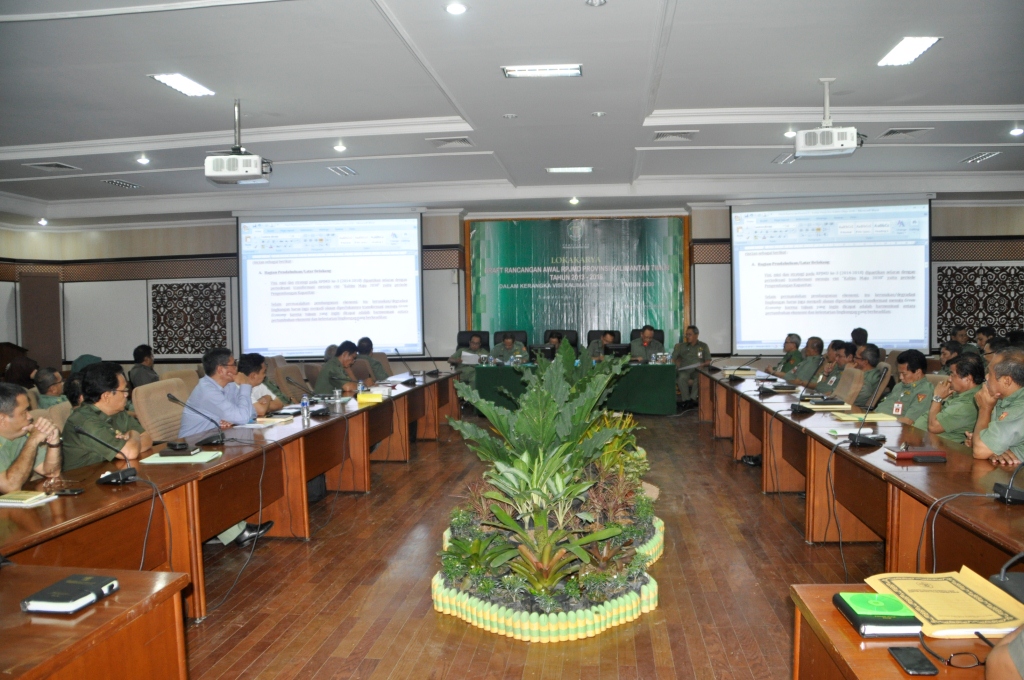
East Kalimantan Province's strategic issues include: 1. Climate change due to greenhouse gas emissions; 2. Pan Borneo Highway Development Plan; 3. The trend of increasingly high crude oil prices; 4. Mainstreaming the green economy in development planning; 5. The importance of developing the agribusiness industry in the future; 6. Unresolved fuel and electricity shortages; 7. Achievement of MDGs & MP3EI; 8. Commitment to eradicating and preventing corruption; 9. Weak coordination between provinces and districts/cities in controlling natural resource exploitation permits; 10. Revitalization of the Capital of East Kalimantan Province.
East Kalimantan Development Targets and Objectives
The targets and targets for East Kalimantan Development according to the 2014 – 2018 RPJMD for East Kalimantan include 1. Increasing the average length of school from 9 years to 12 years in 2018; 2. Reducing the illiteracy rate, the current condition is 97% to 100% in 2018; 3. Increasing life expectancy, the current condition is that life expectancy is 69 years to 70 years in 2018; 4. Increasing the Gender Development Index; 5. Increasing the Gender Empowerment Index; 6. Declining unemployment rate, data conditions. The open unemployment rate in 2013 was 6% to 4% in 2013; 7. Reducing poverty levels; 8. Increased economic growth; 9. Increasing the contribution of the agricultural sector to the GRDP structure; 10. Increasing the number of agricultural-based downstream industries; 11. Decreasing inflation rate; 12. increase in per capita income; 13. Decreasing Gini index; 14. Increase in the value of non-oil and gas exports; 15. Decreased regional inequality index; 16. Road stability level; 17. Increase in subsidized fuel quotas; 18. Increased community satisfaction index; 19. Decrease in the corruption perception index; 20. Increased BPK opinion; 21. Increased democracy index; 22. Increasing village self-sufficiency; 23. Reducing greenhouse gas emissions; 24. Reducing the level of water pollution status; 25. Increase in the number of independent integrated cities; 26. Development of economic activities in industrial areas; 27. Increasing the comfort of provincial capitals and increasing the electrification ratio. (Public Relations of the East Kalimantan Bappeda/Sukandar, S.Sos).