Tuesday, 01 December 2020
Build High Quality Infrastructure
Balikpapan, Thursday 7/3/13. Improving high quality infrastructure is crucial in improving the regional economy, and 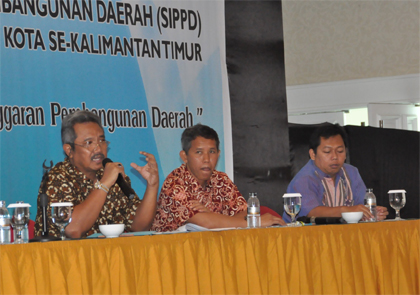 has an impact on improving community welfare. East Kalimantan Province is a region that has very abundant natural resources and has a fairly high APBD in Indonesia, but still has many obstacles regarding infrastructure development, so a high quality infrastructure development plan is needed.
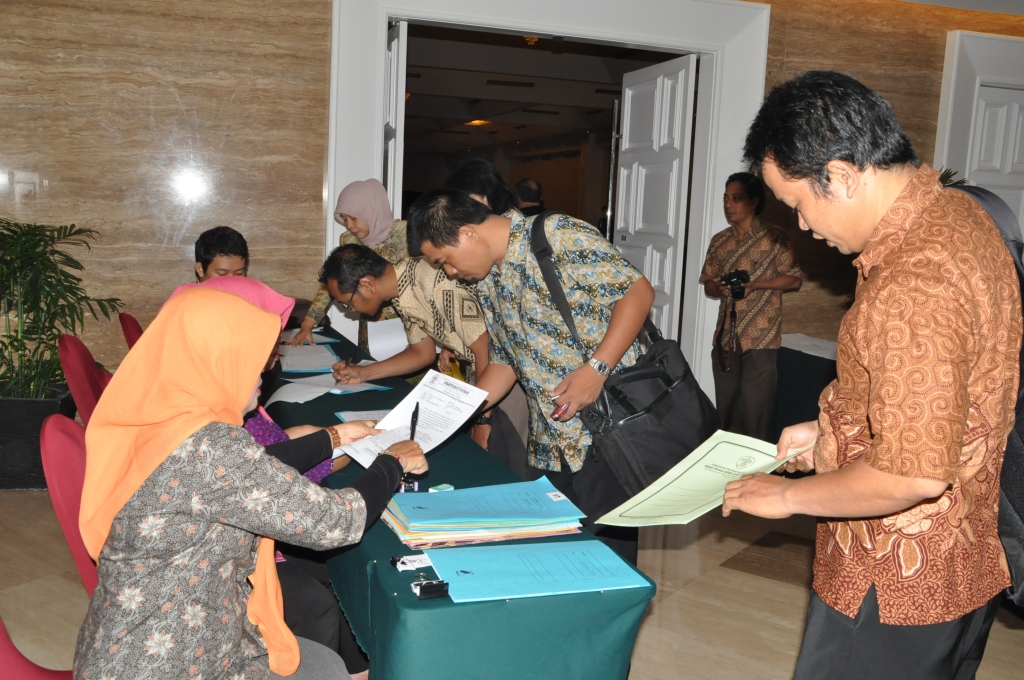
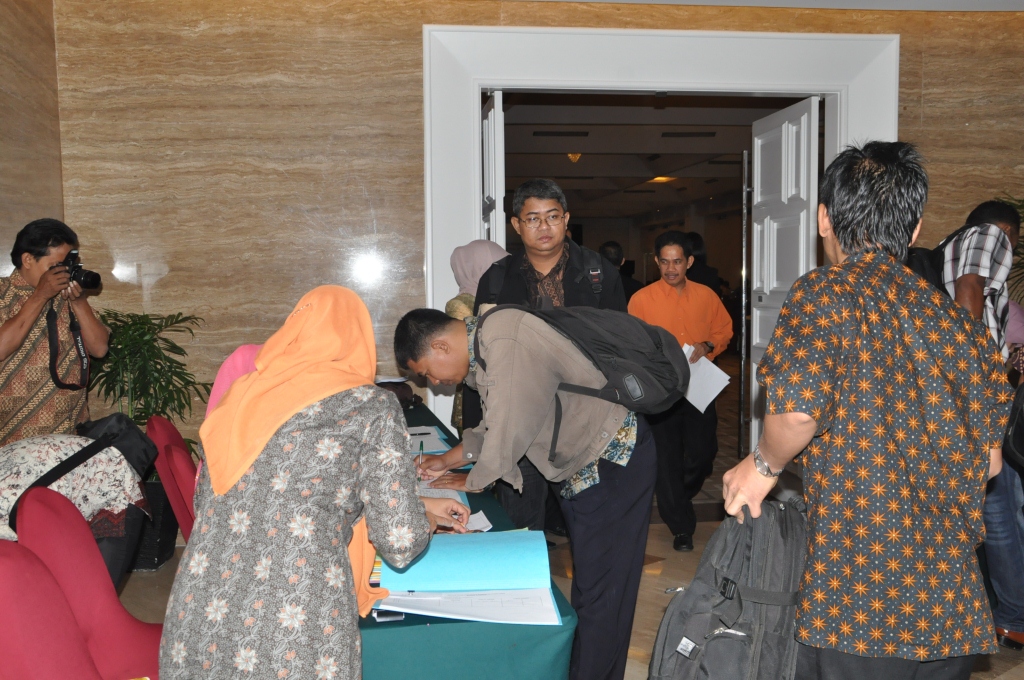
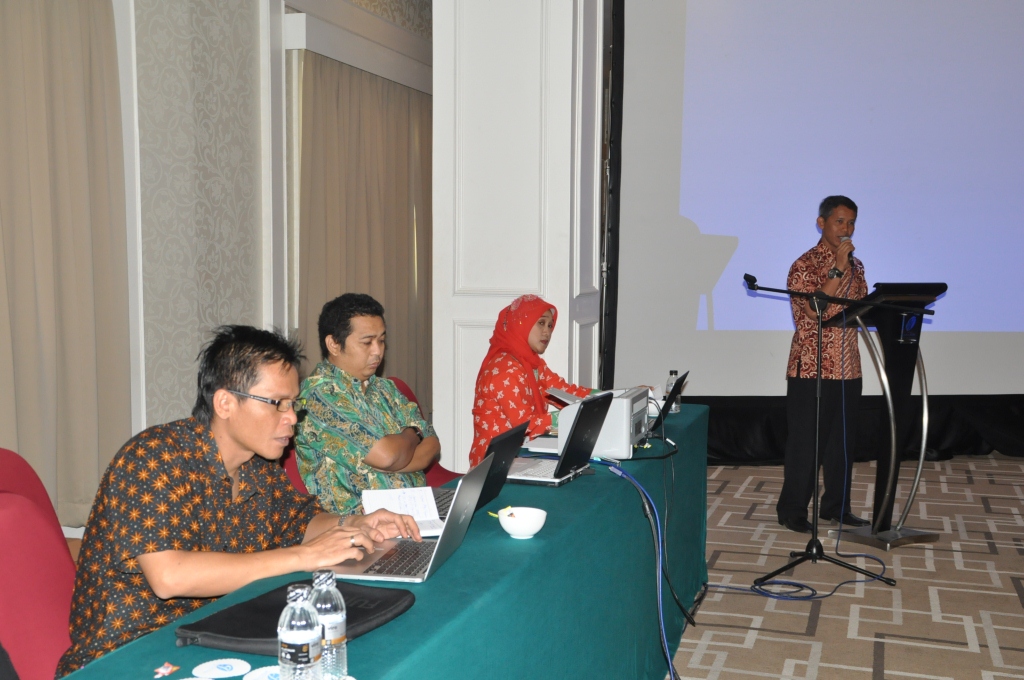
"Most of the quality of roads in East Kalimantan Province is 8 tons, for future planning it would be better to increase the quality to 18 tons, we will definitely be able to do this," said the Head of the Regional Assessment and Financing Division of the East Kalimantan Province Bappeda, Ir.H. Djoko Susilo Handono represented the Head of the East Kalimantan Bappeda when giving a speech and opening the Regional Development Planning Information System (SIPPD) Technical Guidance (Bimtek) event for the Provincial SKPD and East Kalimantan Provincial Bappeda as well as Regency/City Bappeda throughout East Kalimantan with the theme "With SIPPD We Improve the Discipline of Regional Development Planning and Budgeting" and accompanied by the Head of the East Kalimantan Bappeda Program Planning Subdivision, Ir. Surono, M.Si and SIPPD resource person from Surabaya City, Ali Mujib in the meeting room of the Jatra Hotel, Balikpapan City, attended by participants from all SKPDs within the East Kalimantan Provincial Government and Regency/City Bappeda throughout East Kalimantan totaling approximately two hundred and fifty people.
Regional Development Planning Information System (SIPPD), is a tool that will assist Bappeda in the process of preparing RPJP, RPJMD and RKPD which includes the Strategic Plan and Work Plan for each SKPD. In preparing the RPJMD, a system is needed that is able to maintain the process of adjusting the activities carried out by each SKPD so that they are always in line with the Vision and Mission of the Regional Head.
At a practical level, the conventional development planning mechanism (recapitulation of proposed programs/activities and synchronization with manual budgeting) has many weaknesses related to regulations (account code system), ability to support synchronization of planning with budgeting, inability to prevent overlapping proposals, limited desired data output (looking at recapitulation of proposals and budget assignments and various perspectives, both sectoral and spatial). These weaknesses cause delays in the recapitulation and compilation of proposals, so that the preparation of the "General Budget Policy" (KUA) and "Temporary Budget Priorities and Ceilings" (PPAS) which are the output and planning process at Bappeda are behind schedule. Furthermore, this caused the preparation of the East Kalimantan Provincial APBD Draft to be behind schedule which had an impact on activities, so that it could not be implemented at the beginning of the fiscal year.
Information systems have developed along with the very rapid development of information technology and have proven to play a very important role in economic activities and development strategies. The existence of information systems supports the performance of increasing efficiency, effectiveness and productivity of government organizations, the business world and encourages the realization of an advanced and prosperous society. The information system that is needed, utilized and developed for regional development needs is an information system that is primarily directed at supporting regional development planning.
The development of Information Technology (IT) and the internet have become powerful tools for rethinking government systems with new models. Information technology and the internet are encouraging the transformation and paradigm of traditional bureaucracy (which emphasizes standardization, routine, specialization, internal focus and authority), towards the e-government paradigm (which emphasizes building coordinated networks, external cooperation and service orientation to customers/society as its focus). So IT becomes one of the main elements in improving government managerial systems.
IT and internet-based government systems (e-government) provide many benefits for all parties, including government organizations, between government organizations, between business organizations and society at large. So that all parties can search for and find out information and carry out transactions with local government agencies anytime and anywhere without being limited by space and time.
This is in line with Law No.25 of 2004 concerning the National Development Planning System which aims to support coordination between development actors; guarantee the creation of integration, synchronization and synergy both between regions, between spaces, between times, between government functions and between the Center and the Regions; guarantee linkage and consistency between planning, budgeting, implementation and supervision; optimize community participation and ensure that resource development is achieved efficiently, effectively, fairly and sustainably. The complexity of the affairs and actors involved requires the government to immediately carry out the transformation process towards e-government. Through this transformation process, the government can optimize the use of advances in information technology for bureaucratic organizational barriers, as well as form a network of management systems and work processes that enable government agencies to work in an integrated manner to simplify access to information and public services that must be provided by the government.
With the Regional Planning Information System (SIPPD), it is hoped that it can organize various aspects of development planning data in an integrated and comprehensive manner, both in structure, type and format of data for development planning. (Public Relations of Bappeda Kaltim/Sukandar, S. Sos